
SEO Guide
Topic Clusters in SEO: What They Are & How to Build Topic Clusters
Organize content around themes and build topical authority for better search visibility.
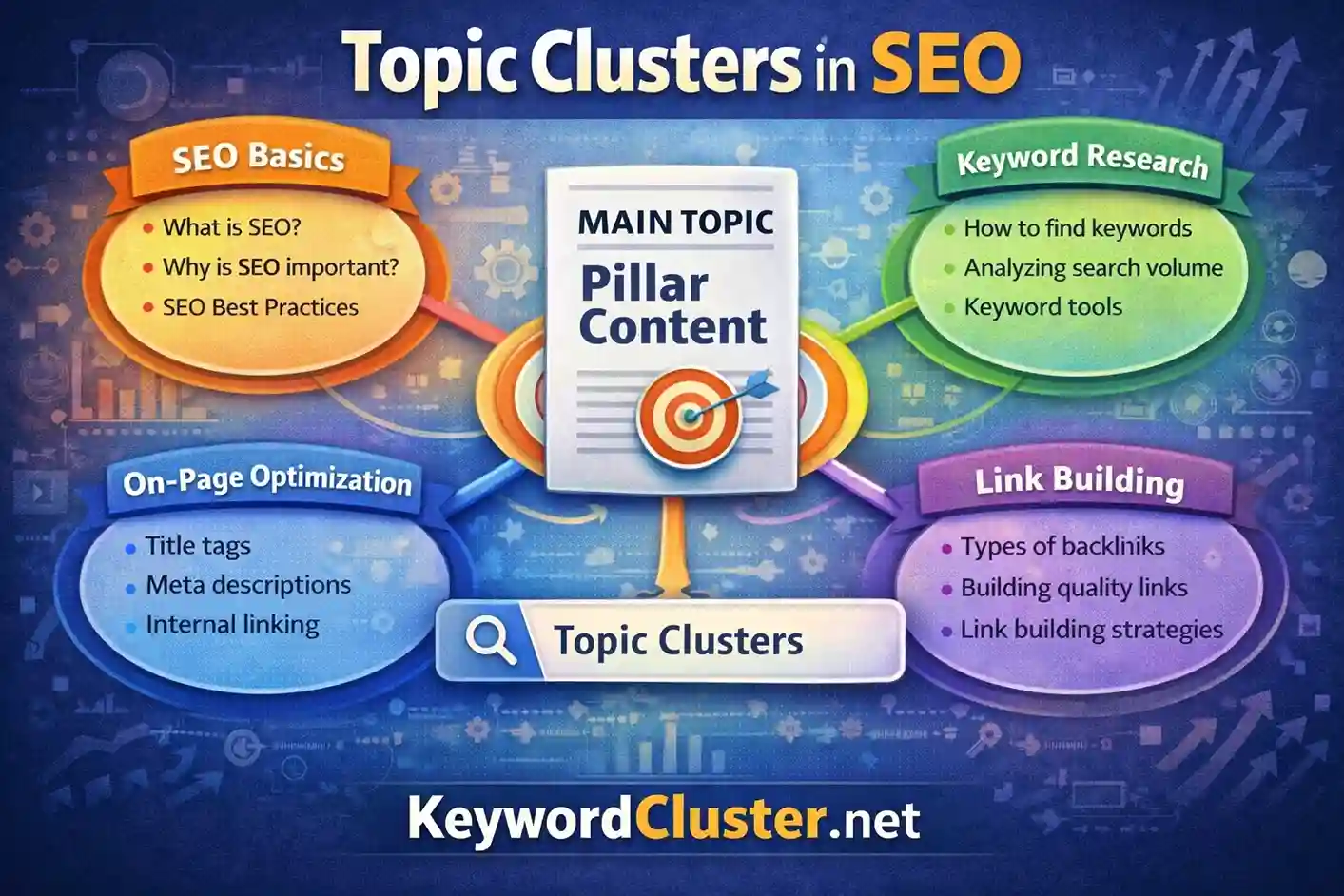
Topic clusters are a modern SEO strategy that helps websites build topical authority and improve search visibility.
Instead of creating isolated articles targeting individual keywords, topic clusters group related content around central themes.
This structure helps search engines understand content relationships and rank pages for multiple related search queries.
Topic clusters work alongside keyword clustering and long-tail keywords research strategies to strengthen SEO performance.
Keyword clustering tool helps SEO professionals identify keyword relationships and intent patterns, enabling smarter content strategies.
What Are Topic Clusters?
A topic cluster is a content structure that organizes pages around a central theme.
It consists of:
- pillar pages (main topic pages)
- supporting content (related articles)
- internal links (connections between pages)
This structure improves search engine understanding of content relationships and topical relevance.
For example:
Main topic: SEO content strategy
Supporting pages:
- keyword clustering
- search intent
- long-tail keywords
Each supporting page links back to the pillar page, strengthening topical authority.
Why Topic Clusters Matter for SEO
Search engines prioritize content that demonstrates expertise and relevance.
Topic clusters improve SEO in several ways:
- 1
Build Topical Authority
Covering related subtopics signals expertise.
- 2
Improve Internal Linking
Links between cluster pages enhance content relationships.
- 3
Rank for Multiple Keywords
Pages can rank for variations of search queries.
- 4
Reduce Keyword Cannibalization
Structured content prevents competing pages targeting the same keywords.
- 5
Enhance User Experience
Users find related information easily.
Topic clusters help websites transition from keyword-focused SEO to topic-focused strategies.
Topic Clusters vs Traditional SEO
Traditional SEO focused on optimizing pages for individual keywords.
Modern SEO prioritizes topics and content relationships.
Comparison:
Traditional SEO
- • single keyword targeting
- • isolated pages
- • limited topical coverage
Topic cluster SEO
- • grouped content
- • internal linking
- • topical authority
Search engines reward content that demonstrates comprehensive topic coverage.
Topic Clusters and Keyword Clustering
Topic clusters and keyword clustering work together.
Keyword clustering:
- • groups related search queries
- • identifies content opportunities
- • supports SEO planning
Topic clusters:
- • structure content
- • improve internal linking
- • enhance topical authority
Keyword clustering helps identify content ideas, while topic clusters organize content strategies. Together, they create stronger SEO foundations.
Learn more in our keyword clustering guide.
How to Build Topic Clusters
Follow these steps:
- 1
Step 1 – Choose Core Topics
Select main themes relevant to your audience.
Example: SEO keyword research, content strategy, search intent
- 2
Step 2 – Create Pillar Pages
Develop comprehensive pages covering broad topics.
- 3
Step 3 – Develop Supporting Content
Write articles addressing subtopics.
- 4
Step 4 – Use Internal Links
Link supporting pages to pillar pages.
- 5
Step 5 – Optimize for Keywords
Include related keywords naturally.
This structure improves search engine understanding and content relevance.
Examples of Topic Clusters
SEO Topic Cluster
Pillar page: SEO keyword research
Supporting pages:
- keyword clustering
- long-tail keywords
- search intent
- content optimization
Content Marketing Cluster
Pillar page: content strategy
Supporting pages:
- content planning
- SEO writing
- keyword research
- audience targeting
E-commerce Cluster
Pillar page: product categories
Supporting pages:
- product guides
- buying guides
- category optimization
Each cluster strengthens topical authority and search visibility.
Topic Clusters and Search Intent
Search intent describes user purpose behind queries.
Topic clusters help align content with intent by:
- addressing user questions
- providing comprehensive information
- grouping related content
Intent-based strategies improve content relevance and rankings.
Read our guide on search intent in SEO.
Benefits of Topic Clusters
Topic clusters deliver:
- stronger topical authority
- improved rankings
- better user engagement
- efficient content organization
- enhanced internal linking
SEO strategies built on topic clusters create long-term search visibility.
How KeywordCluster Supports Topic Clusters
Keyword clustering tool identifies relationships between search queries.
This helps SEO professionals:
- group related keywords
- discover content opportunities
- plan topic clusters
By analyzing keyword relationships, content strategies become more structured and effective.
Frequently Asked Questions
- What is a topic cluster in SEO?
- A topic cluster is a content structure that organizes pages around a central theme with supporting articles and internal links.
- What is a pillar page in a topic cluster?
- A pillar page is the main page of a topic cluster that covers a broad topic. Supporting articles link to the pillar page and explore specific subtopics related to the main subject.
- Why are topic clusters important?
- Topic clusters improve search engine understanding of content relationships and build topical authority.
- How do topic clusters improve rankings?
- They help pages rank for multiple related keywords and strengthen content relevance.
- What is the difference between topic clusters and keyword clusters?
- Keyword clusters group search queries, while topic clusters structure content strategies.
- How do internal links support topic clusters?
- Internal links connect related content, improving search engine understanding and topical authority.
Plan Topic Clusters with KeywordCluster
Use the Keyword Cluster Chrome extension to discover keyword relationships and intent groups directly in Google search—so you can plan topic clusters with confidence.