
Complete Guide
Keyword Clustering for SEO: Complete Guide to Grouping Keywords
What it is, why it matters, and how to group keywords for better rankings.
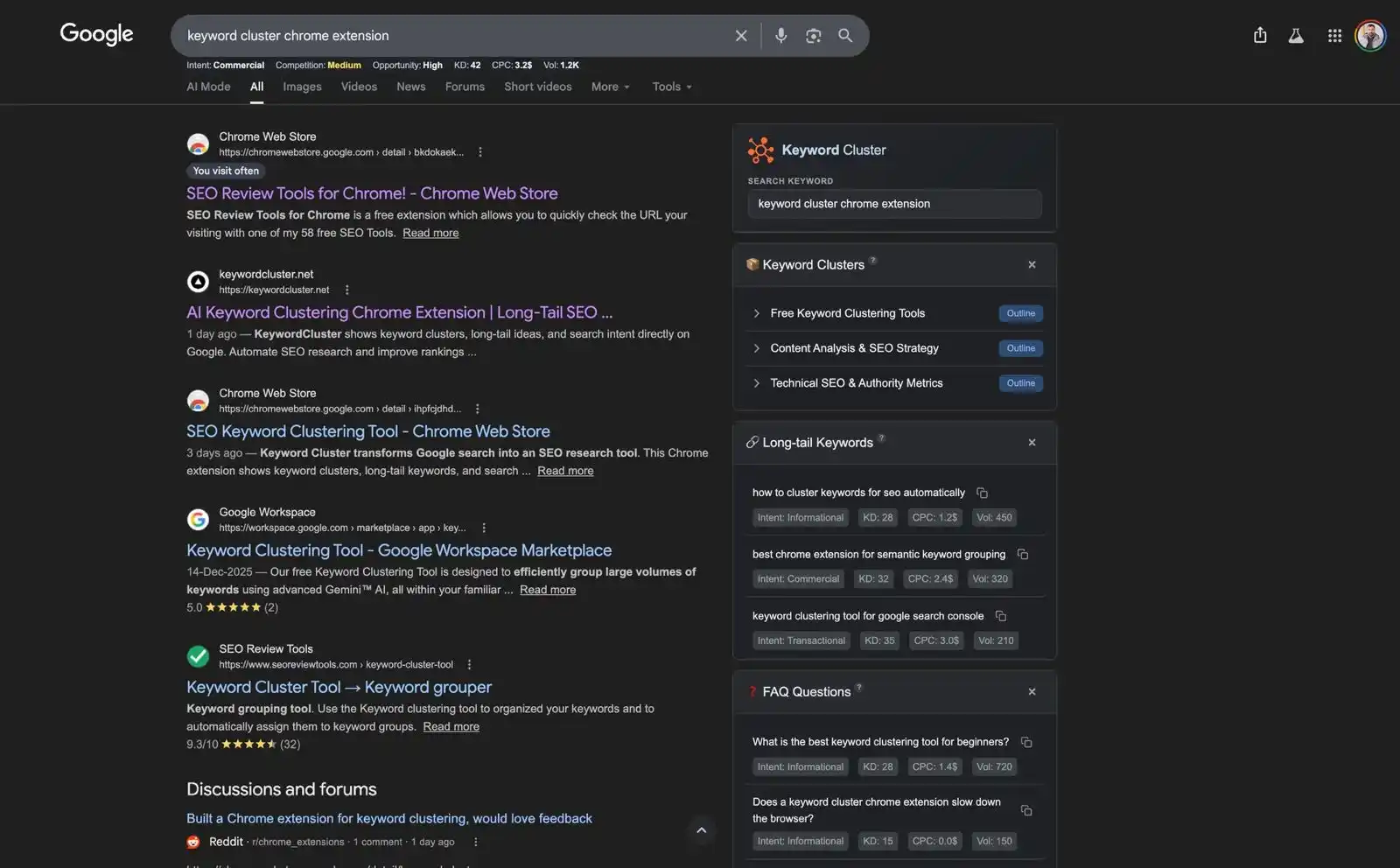
Keyword clustering is one of the most effective ways to improve modern SEO strategies.
Instead of targeting a single keyword per page, search engines now prioritize content that covers a group of related search queries. This approach is called keyword clustering.
By organizing keywords into clusters, websites can build stronger topical authority and rank for multiple related search terms.
This guide explains what keyword clustering is, why it matters for SEO, and how to create keyword clusters effectively. You can also explore the keyword clustering tool available on the homepage to analyze keyword clusters directly in Google search.
What Is Keyword Clustering?
Keyword clustering is the process of grouping related keywords based on search intent, topic similarity, and search results.
For example, the following keywords belong to the same cluster:
- keyword clustering tool
- SEO keyword clustering
- keyword clustering software
These keywords share similar intent and can often be targeted within the same page or content structure.
Clustering keywords allows search engines to better understand the context and relevance of your content.
Why Keyword Clustering Is Important for SEO
Keyword clustering improves SEO performance in several ways.
- 1
Rank for More Keywords
Instead of optimizing a page for just one keyword, clustering allows you to rank for multiple related search queries.
- 2
Improve Content Relevance
Search engines analyze semantic relationships between keywords. Clustering helps align your content with those relationships.
- 3
Build Topical Authority
When your content covers related keywords within a cluster, search engines recognize your website as an authority on that topic.
- 4
Avoid Keyword Cannibalization
Keyword clustering helps prevent multiple pages from competing for the same search terms.
Keyword Clustering vs Keyword Grouping
Many SEO professionals use the terms keyword clustering and keyword grouping interchangeably.
Both refer to organizing keywords based on topic similarity and search intent. However, keyword clustering usually relies on analyzing search results to determine which keywords belong together.
This approach allows SEO professionals to build stronger content strategies that target entire keyword clusters instead of individual keywords.
Types of Keyword Clustering
There are several ways to cluster keywords.
- Semantic Clustering
- Keywords are grouped based on meaning and topic similarity.
- SERP-Based Clustering
- Keywords are grouped if they produce similar search results on Google.
- Intent-Based Clustering
- Keywords are grouped based on search intent such as informational or transactional.
Modern SEO strategies often combine these methods.
Keyword Clustering vs Traditional Keyword Targeting
Traditional SEO focused on optimizing pages for a single keyword.
Modern SEO focuses on keyword clusters, where a page targets multiple related keywords that share similar search intent.
This approach helps content rank for more variations of a search query while improving topical relevance.
For example, a page targeting the keyword cluster around “keyword clustering” may also rank for:
- SEO keyword clustering
- keyword clustering tools
- keyword grouping SEO
This strategy allows websites to capture significantly more search traffic.
Keyword Clustering Example
Consider a website targeting SEO topics.
Main keyword cluster
SEO keyword research
Related keywords in the cluster
- keyword research tools
- how to do keyword research
- keyword research strategy
- SEO keyword analysis
Instead of creating separate pages for each keyword, they can be structured under a single topic cluster.
How to Cluster Keywords for SEO
Follow these steps to build keyword clusters.
- 1
Step 1 – Collect Keywords
Use keyword research tools or search suggestions to gather a list of relevant keywords.
- 2
Step 2 – Analyze Search Intent
Identify the intent behind each keyword.
- 3
Step 3 – Group Related Keywords
Combine keywords with similar intent or search results.
- 4
Step 4 – Build Content Around Clusters
Create pages that target an entire keyword cluster instead of a single keyword.
Watch: How to cluster keywords for SEO
Keyword Clustering Tools
Manual keyword clustering can be time-consuming. Several keyword clustering tools can automate the process and analyze search queries to group related keywords automatically.
One example is the Keyword Cluster Chrome extension, which shows keyword clusters, long-tail keywords, and search intent directly within Google search results.
This allows SEO professionals to discover keyword clusters instantly while researching topics.
Keyword Clustering and Topic Clusters
Keyword clustering is closely connected to topic cluster SEO strategies. Topic clusters organize content around a main subject using a pillar page and supporting articles.
Keyword clusters help determine:
- which keywords belong to the pillar page
- which keywords should become supporting articles
This structure improves internal linking and search rankings.
Common Keyword Clustering Mistakes
Some common mistakes include:
- ×Targeting too many unrelated keywords
- ×Ignoring search intent
- ×Creating separate pages for similar keywords
- ×Not building internal links between clustered content
Avoiding these mistakes helps maintain a strong content structure.
Frequently Asked Questions
- What are cluster keywords?
- Cluster keywords are groups of related search terms that share similar intent or topic. They are organized together so you can target them with the same page or content instead of optimizing for one keyword at a time.
- How do you cluster keywords?
- You can cluster keywords by collecting a list of terms, analyzing search intent, and grouping those with similar intent or overlapping search results. Many people use spreadsheets manually or keyword clustering tools that analyze SERPs to group keywords automatically.
- Why are keyword clusters important?
- Keyword clusters help you rank for multiple related queries, build topical authority, and avoid keyword cannibalization. They also make it easier to plan content around full topics instead of single keywords.
- What is a keyword cluster?
- A keyword cluster is a set of related keywords that belong together based on topic similarity, search intent, or shared search results. Targeting a cluster lets one page rank for many variations of a search query.
- What are the 4 types of clustering?
- Common types of keyword clustering are: semantic clustering (by meaning and topic), SERP-based clustering (by similar search results), intent-based clustering (by user intent such as informational or transactional), and manual or tool-based grouping. Many strategies combine these approaches.
- What is a cluster example?
- An example is a cluster around “SEO keyword research”: related keywords in the same cluster might include “keyword research tools,” “how to do keyword research,” “keyword research strategy,” and “SEO keyword analysis.” One page or topic can target the whole cluster.
- How do I group keywords for free?
- You can group keywords for free by using Google autocomplete and related searches to gather terms, then organizing them in a spreadsheet by intent or topic. Free keyword clustering tools and Chrome extensions (such as Keyword Cluster) can also group keywords automatically using search result data.
Start Clustering Keywords Faster
Manual keyword clustering requires significant time and effort. Tools like Keyword Cluster simplify the process by automatically generating keyword clusters, long-tail keyword ideas, and search intent insights directly from Google search results.
This helps marketers identify keyword opportunities and plan SEO content more efficiently.
Install the Keyword Cluster Chrome extension to start discovering keyword clusters instantly.