
SEO Guide
Best Keyword Clustering Tools for SEO (2026 Guide)
Compare free and paid tools to group keywords, analyze search intent, and build topic clusters for better rankings.
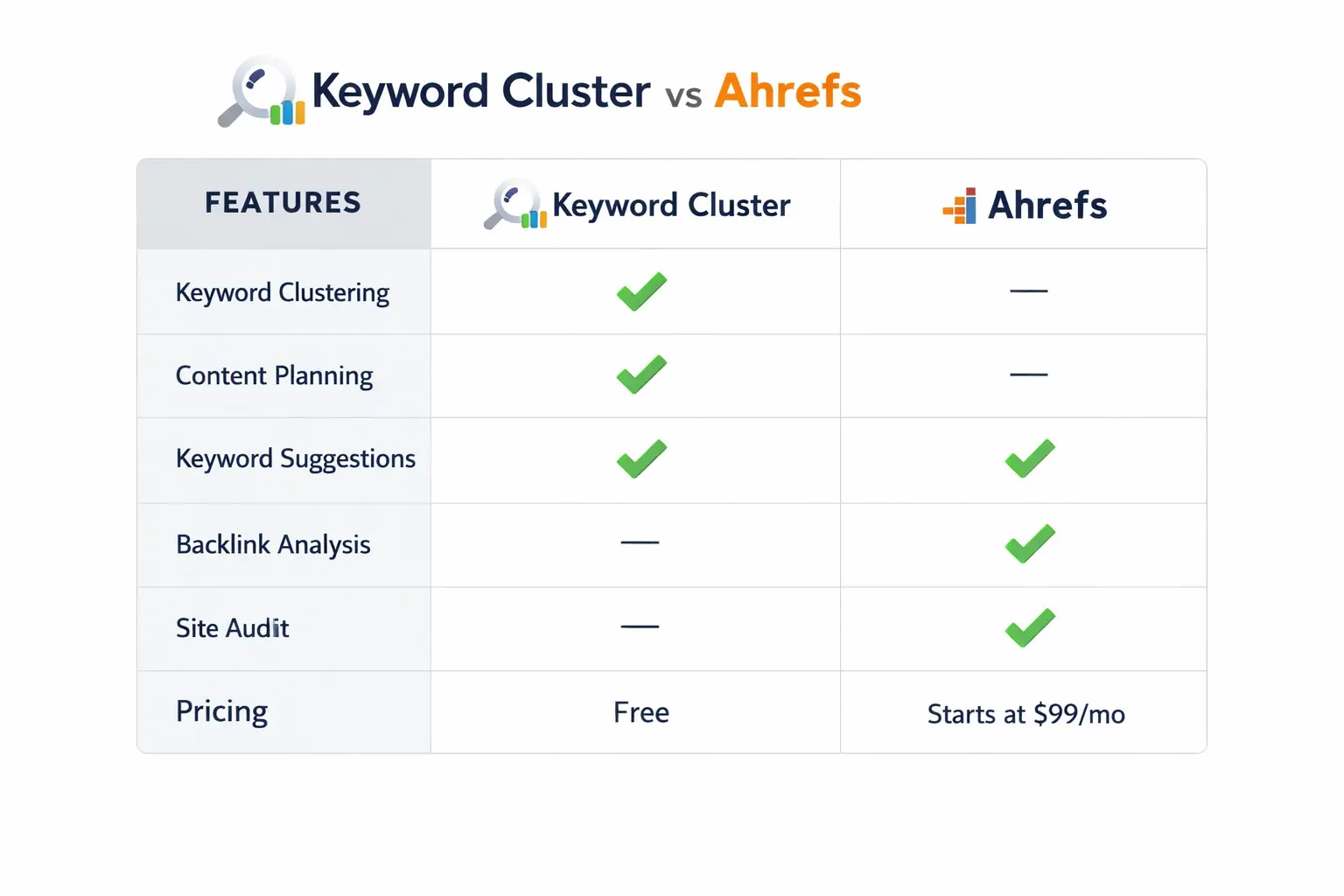
Keyword clustering has become a core SEO practice for building topical authority and creating content that ranks for multiple search queries. Instead of targeting a single keyword per page, SEO professionals group related keywords into clusters and build pages that address an entire topic.
In this guide, you'll learn what keyword clustering tools are, why they matter for SEO, and the best keyword clustering tools available today.
You can also use the keyword clustering tool on our homepage to see clusters directly in Google search.
What Are Keyword Clustering Tools?
Keyword clustering tools automatically group related keywords together based on search intent or search result similarity. These tools analyze keywords and determine which ones should belong to the same content page.
Instead of creating separate pages for each keyword, clustering tools help you build topic-focused pages that target multiple keywords at once, improving both rankings and topical authority.
Why Keyword Clustering Is Important for SEO
Search engines increasingly rank content based on topics rather than individual keywords. Keyword clustering allows SEO teams to organize their keyword research into logical content groups.
- 1
Improve Topical Authority
When you target clusters of related keywords, your content becomes more comprehensive. This signals to search engines that your website is an authority on the topic.
- 2
Avoid Keyword Cannibalization
Publishing multiple pages targeting similar keywords can cause pages to compete against each other. Keyword clustering helps consolidate those keywords into a single optimized page.
- 3
Create Better Content Strategy
Clusters provide a clear structure for content planning. Each cluster becomes a page or article within your website's topic architecture.
- 4
Rank for More Long-Tail Keywords
A single page targeting a keyword cluster can rank for dozens or even hundreds of related search queries.
Types of Keyword Clustering Methods
Different SEO tools use different techniques to group keywords.
SERP-Based Clustering
SERP-based clustering analyzes Google search results. If two keywords return similar search results, they likely belong in the same cluster. This method is considered the most accurate for SEO because it reflects how Google interprets search intent.
AI Keyword Clustering
AI-based clustering uses machine learning and embeddings to detect relationships between keywords. This method works well for large datasets and automation.
NLP Semantic Clustering
Natural Language Processing groups keywords based on semantic meaning. It identifies related phrases and topics even if the keywords are not identical.
Best Keyword Clustering Tools
Below are some of the most popular keyword clustering tools used by SEO professionals.
| Tool | Clustering Method | Best For | Key Feature |
|---|---|---|---|
| KeywordCluster.net | SERP-based | SEO professionals | Chrome extension clustering |
| Keyword Insights | SERP-based | agencies | automated content briefs |
| Ahrefs | SERP overlap | full SEO workflows | large keyword database |
| Surfer | AI clustering | content teams | SEO writing integration |
| SE Ranking | SERP similarity | freelancers | affordable SEO suite |
1. KeywordCluster.net
KeywordCluster.net is designed specifically for SERP-based keyword clustering directly inside Google, Bing & Youtube search results. Instead of exporting spreadsheets and uploading keywords into tools, users can cluster keywords while browsing search results using a Chrome extension.
Key advantages include:
- real-time keyword clustering
- SERP-based grouping
- clean sidebar interface inside Google search
- fast analysis without manual keyword sorting
This workflow helps SEO professionals save hours of manual keyword analysis and quickly organize keywords into content clusters.
2. Keyword Insights
Keyword Insights is widely known for its SERP-based keyword clustering and content brief generation. The platform analyzes search results to determine which keywords share similar search intent, then groups them into clusters and generates content outlines.
Features include:
- SERP similarity clustering
- search intent classification
- automated content briefs
- keyword grouping reports
This tool is particularly useful for SEO agencies managing large keyword datasets.
3. Ahrefs Keyword Clustering
Ahrefs recently introduced keyword clustering within its keyword research ecosystem. Since Ahrefs already maintains one of the largest keyword databases, users can analyze clusters directly inside the platform.
Key capabilities include:
- SERP overlap clustering
- keyword difficulty analysis
- integrated keyword research
- ranking metrics and traffic data
This option works best for teams already using Ahrefs as their primary SEO platform.
4. Surfer Keyword Clustering
Surfer SEO includes keyword clustering as part of its content optimization and planning platform. The tool focuses heavily on content workflows, helping users build article outlines based on keyword clusters.
Main features include:
- AI-powered keyword grouping
- content planning workflows
- SEO writing integration
- topic and keyword suggestions
Surfer is especially popular among content marketers and editorial teams.
5. SE Ranking Keyword Grouper
SE Ranking provides a keyword grouping tool that clusters keywords using SERP similarity analysis. It is often used by freelancers and agencies due to its balance of functionality and affordability.
Key features include:
- automated keyword grouping
- SERP similarity clustering
- SEO project management tools
- keyword reporting dashboards
For teams looking for a budget-friendly clustering solution, SE Ranking is a solid choice.
How to Cluster Keywords for SEO
To cluster keywords effectively, follow this simple workflow.
- 1Collect keywords from keyword research tools.
- 2Analyze search intent and SERP similarity.
- 3Group keywords that share similar search results.
- 4Assign each keyword cluster to a content page.
- 5Create comprehensive content targeting the entire cluster.
This process helps build topic-focused pages that rank for multiple keywords simultaneously. Learn more in our keyword clustering guide.
How Keyword Clustering Improves Content Strategy
Keyword clustering changes how content strategies are planned. Instead of producing many small articles targeting single keywords, SEO teams create topic clusters that cover entire subjects.
This approach improves:
- topical authority
- internal linking structure
- content depth
- organic traffic potential
Websites using keyword clustering often see better rankings and higher traffic growth over time.
Frequently Asked Questions About Keyword Clustering Tools
- What is the best keyword clustering tool?
- The best keyword clustering tool depends on your workflow. Tools that use SERP-based clustering tend to produce the most accurate results because they analyze real search engine results to determine keyword intent.
- What is SERP-based keyword clustering?
- SERP-based keyword clustering groups keywords together if they produce similar search results on Google. If multiple keywords share the same ranking pages, they are typically considered part of the same search intent cluster.
- Are keyword clustering tools necessary for SEO?
- While keyword clustering can be done manually, clustering tools save significant time and help analyze large keyword datasets quickly. Most modern SEO teams rely on automated clustering tools for efficiency.
- How many keywords should be in a cluster?
- The size of a keyword cluster varies depending on the topic. Some clusters may contain only a few keywords, while larger topics may include dozens of related search queries.
Final Thoughts
Keyword clustering is now an essential SEO strategy for building topical authority and ranking for multiple search queries with fewer pages. By grouping related keywords together, SEO professionals can create stronger content structures and avoid keyword cannibalization.
The tools listed in this guide help automate the clustering process, allowing teams to organize keyword research faster and build more effective content strategies. If you're starting with keyword clustering, choose a tool that fits your workflow and supports SERP-based clustering for the most accurate SEO insights.
Try the Keyword Cluster Chrome extension to see keyword clusters and long-tail ideas directly in Google search.